

The Role of Physical Affordances in Office Design
Physical affordances provide accessibility, ambience, and mobility opportunities to support our bodies.
Affordances are the subtle cues that invite action—how a space communicates what’s possible within it. They connect design intent to human behavior, creating experiences that feel intuitive. When balanced, affordances help environments support well-being, human performance, and connection.
Our latest idea starters with Revit files bring design and science together.
Loading form…
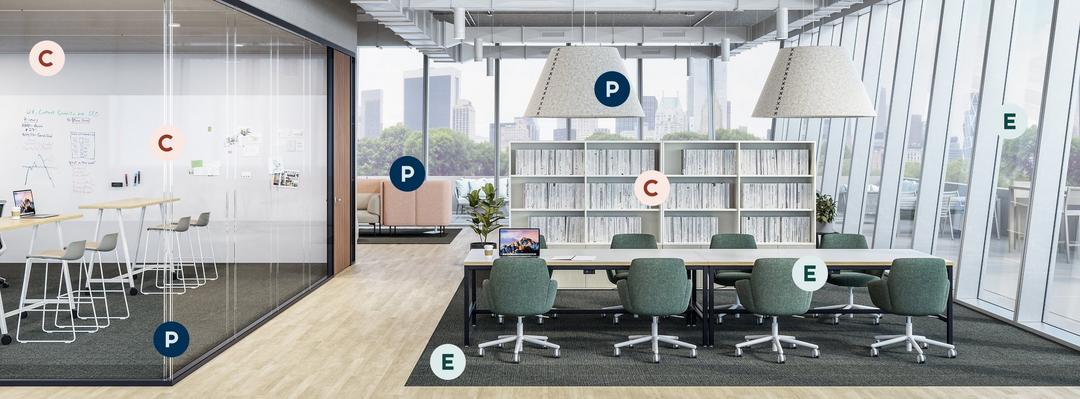

The space invites fluid movement through thoughtfully designed zones that allow users to transition freely, while BuzziShade enhances the experience with balanced lighting and acoustic comfort, creating an environment that feels both comforting and intentional.

Natural textures and varied flooring define pathways and work zones, creating an authentic sense of place. Clusters of Poppy conference chairs around the Cultivate table invite connection and spontaneous collaboration, while generous windows flood the space with daylight to support well-being and comfort throughout the day.

Trivati wall systems creates an enclosed space, containing sound and shielding nearby teams. At the same time, marker boards along Trivati’s walls invite collaboration—encouraging brainstorming, sharing, and the visual expression of ideas. A central Be_Hold bookcase adds visual and acoustic separation, supporting focus and minimizing distractions.
Physical affordances provide accessibility, ambience, and mobility opportunities to support our bodies.

Emotional affordances promote well-being, affinity, and authenticity in a space, all of which nurture our psychological side.

Cognitive affordances create opportunities to enhance focus, improve memory, and uncover knowledge, all to support our minds.
Slide 1/3

Download this guide to discover the trends, insights, applications, and solutions for creating a landscape of acoustically balanced spaces.

Our Lighting Design Guide offers inspiration and insights—from trends to research and design recommendations.

Our Neurodiversity Design Guide highlights applications and solutions for creating more inclusive workplaces.

Our Healthcare design guide includes key industry trends, healthcare applications, and product information.