02/10/2026 • 4 min read
Educational Space Design Starts with Instructional Goals
Students succeed when spaces align with learning objectives
Educators play a pivotal role in the development of students’ knowledge, skills, and social connections. In addition to being experts in curriculum and instruction, they have valuable insights into the types of spaces that best support the achievement of educational goals.
Pairing educators’ expertise with tested design principles is a winning combination for creating spaces that help students reach their full potential. Follow the guideposts below and you’ll harness the power that comes from using instructional design to drive space design.
Space Design Starts with Learning Objectives
Effective design starts with a clear understanding of the overall goals for the space, as well as input from key stakeholders who will be using it. These stakeholders typically include faculty, students, academic program leaders, and others involved in shaping how the space will function.
These discussions often provide a comprehensive understanding not only of their learning objectives and desired outcomes, but also of the activities that will take place in the space.
Learning spaces often need to support multiple activities within a defined space. Think of a theater performance, where there are multiple scenes within a play. The goal of the director is to weave the scenes together in a way that fulfills the design of the writer. Faculty and other key stakeholders know how each scene plays out and what students need to accomplish.
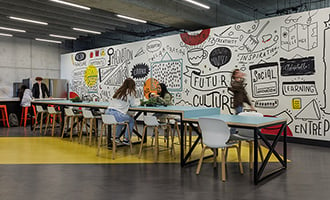
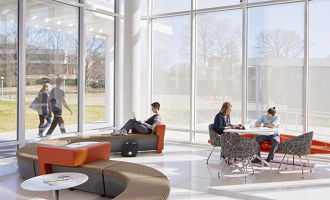
From the stakeholders’ vision, we can design a “stage” that supports multiple "scenes." In other words, we can create a single space that can be easily reconfigured for all activities as needed, from collaborative group learning and presentations to individual focus work and fostering a sense or belonging.

Identify Additional Uses & the Technology Required
When exploring design options for learning spaces, 2 more key elements must be considered: additional uses and technology.
Many learning spaces also support activities beyond formal instruction—such as student organizations, advising, informal gatherings, or faculty meetings. Incorporating aspects that support broader usage of a space provides greater value to both stakeholders and the overall institution.
While clearly critical to the success of any space or experience, technology should be seen as a supporting role for learning objectives rather than the star of the show. Technology helps bring instructional design to life when we first focus on learning objectives. Following this sequence helps achieve a design that will produce the stakeholders’ desired outcome.
Dynamic Education Requires Spaces That Embrace Change
After instructional design, desired outcomes, and supporting technology are identified by stakeholders we can begin designing to meet the users’ physical, cognitive, and emotional needs.
A key aspect of designing spaces on campus is recognizing that change is constant. Course content, faculty, students, and technology all evolve continually. Flexible spaces that embrace changing scenes and adapt for multiple uses are the ones that truly support learning today and in the future.
To design learning spaces with maximum flexibility, explore these open-ended questions:
• What will make the space a place instructors and students want to be?
• What hard and soft skills do students need to develop within the space?
• What are the reasons behind stakeholders’ requests for the space?
Gaining a strong understanding of instructional goals and activities will pay off in the near and long terms. First, you’ll be able to deliver campus learning spaces that support the way education is delivered today. Second, an adaptable design—one that embraces change and creates connection for students, faculty, and staff—will allow the space to be transformed in service of future needs without major additional investment.
Stakeholder Input Is Crucial to the Success of Learning Spaces
Involving stakeholders from the very beginning of a project is absolutely essential for getting learning spaces right. Conversations, surveys, town halls, and focus groups are proven ways to engage stakeholders and capture student voice.
It’s also important to seek stakeholder input throughout the design and build stages to ensure 2 things:
- Confirmation that the space will help faculty accomplish their goals.
- Assurance that, when completed, the learning space will support students in reaching their full potential, whether that’s advancing academic, technical, or social skills.
There’s no such thing as over-communication when planning and designing learning spaces.
You Don’t Have to Solve Learning Space Challenges Alone
Educators don’t have to solve space challenges alone. Advisors can help schools avoid common design pitfalls and create a solution that serves faculty and students for years, even decades, to come.
Haworth is an experienced and trusted advisor that has designed numerous higher-ed and K-12 spaces by tapping into the expertise as well as a wealth of research based on real projects.
More on Higher Education Spaces
Learn more about creating modern campus spaces that enhance the educational experience. Explore Haworth’s solutions for creating dynamic, flexible learning spaces.